 Skagit County
 Why Storm Damage Hits Bow Roofs Differently
Bow sits out in the open, low farmland of the Skagit Valley, close enough to Samish Bay and the Salish Sea that salt-laden wind reaches every roof in town, not just the ones with a water view. Combine that with the driving rain that rolls through Skagit County in fall and winter storms, and you get a specific pattern of roof damage: lifted and cracked shingles on the windward slopes, granule loss from repeated wind-driven rain, and moisture that finds its way under flashing long before a homeowner notices a leak indoors. A roof repair crew that only works dry, sheltered neighborhoods inland doesn't see this combination as often. We do, because it's what most of our Bow storm calls look like.
This page is about one thing: storm damage roof repair for homes in and around Bow. Not a general roofing overview, not a sales pitch for a full tear-off you don't need — just a straight explanation of what storms actually do to roofs out here, what a correct repair involves, and how we handle the job from the first call to the final inspection.
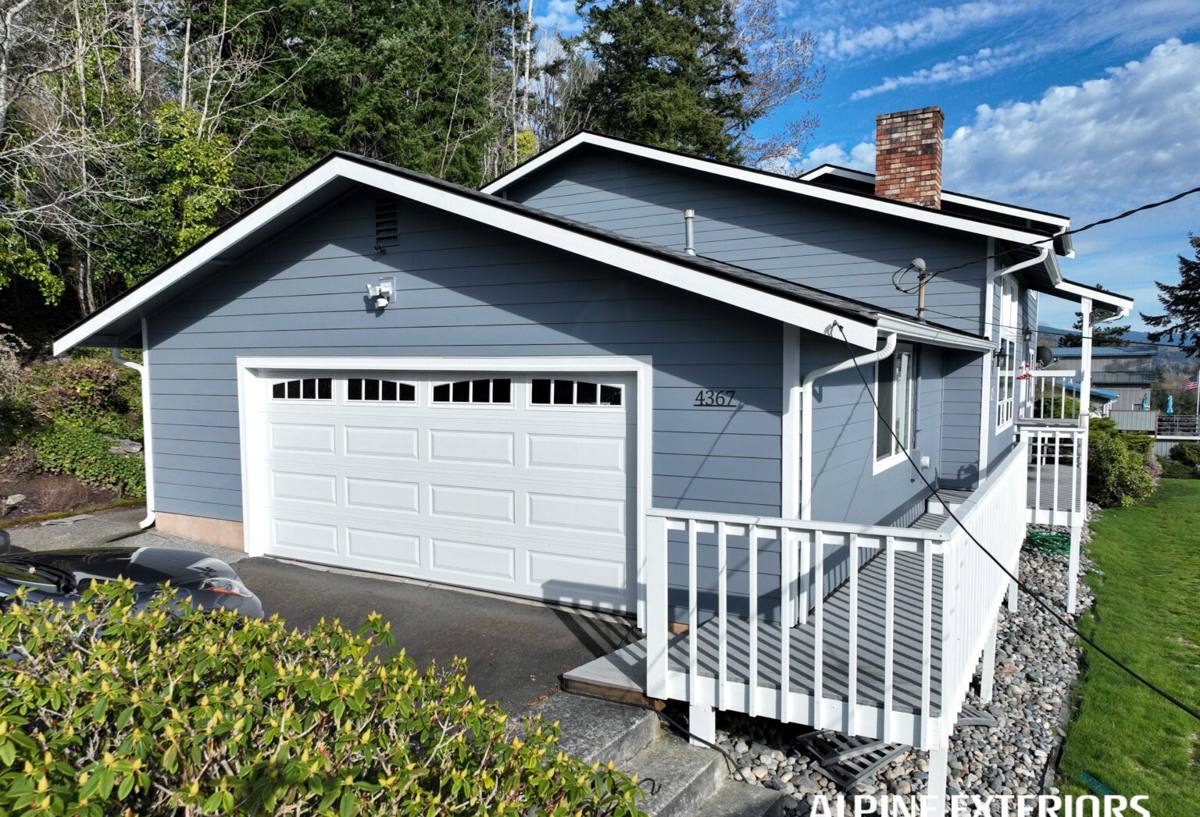
What Salt Air and a Long Moss Season Do to a Roof
Salt-Laden Wind
Coastal and near-coastal air carries fine salt particulate that settles on roofing metal, fasteners, and exposed edges. Over years it accelerates corrosion on unprotected steel flashing, nail heads, and older metal valleys. After a wind event, that corrosion is often what fails first — not the shingle field itself, but the metal details holding water out at the edges, valleys, and penetrations.
Driving Rain and Wind-Driven Uplift
Storms in this part of Skagit County rarely come straight down. Wind-driven rain gets pushed sideways and upward under shingle tabs, lap siding, and ridge caps that would otherwise shed water fine in a calm rain. Repeated wind events loosen fasteners and sealant bonds gradually, so a roof can look intact from the ground while actually holding a dozen small entry points for water.
The Moss Season
Skagit County's long, wet, mild winters are close to ideal moss-growing conditions, and Bow's shaded and low-lying lots often stay damp longer than higher, more exposed ground. Moss doesn't just look bad — it holds moisture against the roof surface, lifts shingle edges as it grows, and works its way under laps and around fasteners. A storm-damaged roof with an established moss mat on it usually needs both problems addressed, because moss growth will keep re-opening any seal we make if it isn't cleared first.
Signs a Bow Home Has Storm Damage
Storm damage isn't always obvious from the driveway. Here's what we tell homeowners to check after a windstorm or heavy rain event:
- Shingles that look curled, lifted at the corners, or visibly out of line with the surrounding field
- Granules collecting in gutters or at the base of downspouts after a storm
- Bent, creased, or missing metal flashing around chimneys, skylights, and roof valleys
- New or growing water stains on interior ceilings, especially near exterior walls or plumbing vents
- Soft or spongy spots when walking the roof, which usually mean the decking underneath has taken on moisture
- Visible gaps or daylight through the roof deck when viewed from an attic space
- Moss buildup concentrated on one slope, which often marks the side that stays wet longest and fails first
- Debris — branches, needles, torn shingle pieces — collected in valleys or against the roof edge
Any one of these on its own might be minor. Two or three together, especially after a named storm system, is worth a proper inspection before the next rain finds the gap.
What a Correct Storm Damage Repair Actually Involves
Inspection Before Estimate
We don't quote a storm repair from the ground or from a photo. A correct assessment means getting on the roof, checking the decking for soft spots by hand and foot, tracing flashing lines at every penetration, and looking at the attic side where accessible. Storm damage is frequently worse — or sometimes much less — than it looks from below, and an honest number depends on actually finding out which.
Repair the Cause, Not Just the Leak
A leak inside the house is often several feet downhill from where water is actually entering the roof, because water travels along decking and framing before it drips. Chasing the interior stain instead of tracing the entry point is the single most common reason a "repaired" roof leaks again in the next storm. We trace water back to its actual entry before we close anything up.
Flashing and Fastener Detail
Given the corrosion pressure from salt air, we pay particular attention to flashing material and fastener choice on Bow repairs — matching or upgrading metal at valleys, chimneys, and wall-to-roof transitions rather than resealing a corroded original in place. Sealant alone is a short-term fix on flashing that's already failing structurally.
Matching Existing Material
Where a repair is a patch rather than a full slope replacement, we match shingle type, exposure, and color as closely as the product line allows. A mismatched patch isn't just a cosmetic issue — inconsistent shingle profiles can create their own small water traps at the seams.
Decking Replacement Where Needed
If moisture has reached the decking, replacing shingles over compromised sheathing just buries the problem. Any soft, delaminated, or rotted decking gets cut out and replaced before new roofing goes down, even when that means a slightly larger scope than the homeowner expected walking in.
Repair vs. Full Replacement: How We Help You Decide
| Factor | Points Toward Repair | Points Toward Replacement |
|---|---|---|
| Age of existing roof | Under 12–15 years, otherwise sound | Near or past expected service life |
| Extent of damage | Isolated to one slope or a few areas | Widespread across multiple slopes |
| Decking condition | Solid, dry sheathing found on inspection | Multiple areas of soft or rotted decking |
| Storm history | First significant event in years | Repeated storm damage over recent seasons |
| Moss and moisture pattern | Manageable, recently treated | Long-established moss mat with underlying wear |
Most storm calls we get in Bow land clearly on one side of this table once we're actually up on the roof. We'll tell you plainly which side yours is on and why, including when a repair is the right and sufficient answer — we're not in the business of upselling a replacement a roof doesn't need.
How Our Process Works, Start to Finish
- Call or request an estimate. Tell us what you're seeing — a leak, missing shingles after a windstorm, visible damage from the ground.
- On-site inspection. We get on the roof and, where accessible, check the attic, documenting what we find with photos.
- Written scope and estimate. You get a clear explanation of what's damaged, what needs to happen, and an honest price range before any work starts.
- Temporary protection if needed. If a storm has left an active leak, we can tarp or otherwise protect the area to stop further water intrusion while repair materials are sourced.
- Repair work. Decking, flashing, and roofing material are addressed in that order — structure first, water barrier second, finish surface last.
- Cleanup and walkthrough. We clear debris and walk the completed work with you before calling the job done.
Working With Your Insurance Claim
Many storm repairs in Skagit County go through homeowners insurance. We provide clear, photo-documented estimates that hold up in the claims process, and we're glad to walk an adjuster through what we found on the roof. What we won't do is inflate a scope to match a claim number or promise a specific settlement outcome — that's between you and your insurer, and our job is to give you an honest, accurate repair estimate you can bring into that conversation.
Materials and Cost Factors
Storm repair pricing depends on more than just square footage. Here's what actually drives the range on a given job:
| Cost Factor | Why It Matters |
|---|---|
| Roof pitch and access | Steeper or higher roofs take longer and require more safety setup |
| Decking condition | Replacing rotted sheathing adds material and labor beyond the surface repair |
| Flashing scope | Full flashing replacement at valleys and penetrations costs more than resealing sound metal |
| Shingle availability | Matching an older or discontinued product can be harder than repairing a newer roof |
| Extent of moss removal | Heavy, long-established moss adds cleaning time before repair work can start |
We'd rather give you a real range tied to what we find on your specific roof than a flat number that doesn't hold up once we're actually up there. That's part of why the on-site inspection comes before any firm quote.
Why It Matters That We Already Work in Bow
A crew that regularly works Bow and the surrounding Skagit County area has already seen how the local combination of salt exposure, wind-driven rain, and moss growth plays out on real roofs, season after season. That means fewer surprises during inspection, a better sense of which flashing details tend to fail first on this coastline, and no learning curve at your expense. It also means we're not disappearing after the job — if a repair needs a follow-up check after the next big storm, we're the crew that's still local and still reachable.
We're not the only option for storm damage repair in Skagit County, and we don't claim to be the biggest. What we can tell you honestly is that we treat every roof here as if the next atmospheric river is already on its way — because in this part of Washington, it usually is.
Get an Honest Look at Your Roof
If a recent storm has left you with missing shingles, a new leak, or just a nagging feeling that something's not right up there, we're happy to take a look. Request a free, no-pressure estimate below and we'll get out to your Bow property, tell you plainly what we find, and lay out your options without pushing you toward more work than the roof actually needs.