 Skagit County
 Window Replacement Built for Bow's Coastal Climate
Bow sits close enough to Samish Bay and the open water of Skagit County that its houses take a different kind of weather beating than homes twenty miles inland. Salt-laden air off the bay works into hardware and finishes. Wind-driven rain off the water finds every gap in old flashing and worn weatherstripping. And the shade, moisture, and mild temperatures that make this part of Skagit County so green also make it one of the better environments in the state for moss and algae to take hold on window sills, tracks, and exterior trim. Windows here don't fail because of one dramatic storm. They fail slowly, from years of moisture cycling through materials that were never sealed or flashed correctly in the first place.
Replacing windows in Bow isn't just a swap-the-glass job. It's an opportunity to fix whatever let water in around the old unit, upgrade the seal between the window and the wall, and choose materials that hold up to salt air instead of pitting, chalking, or corroding within a few seasons. That's the job we focus on.
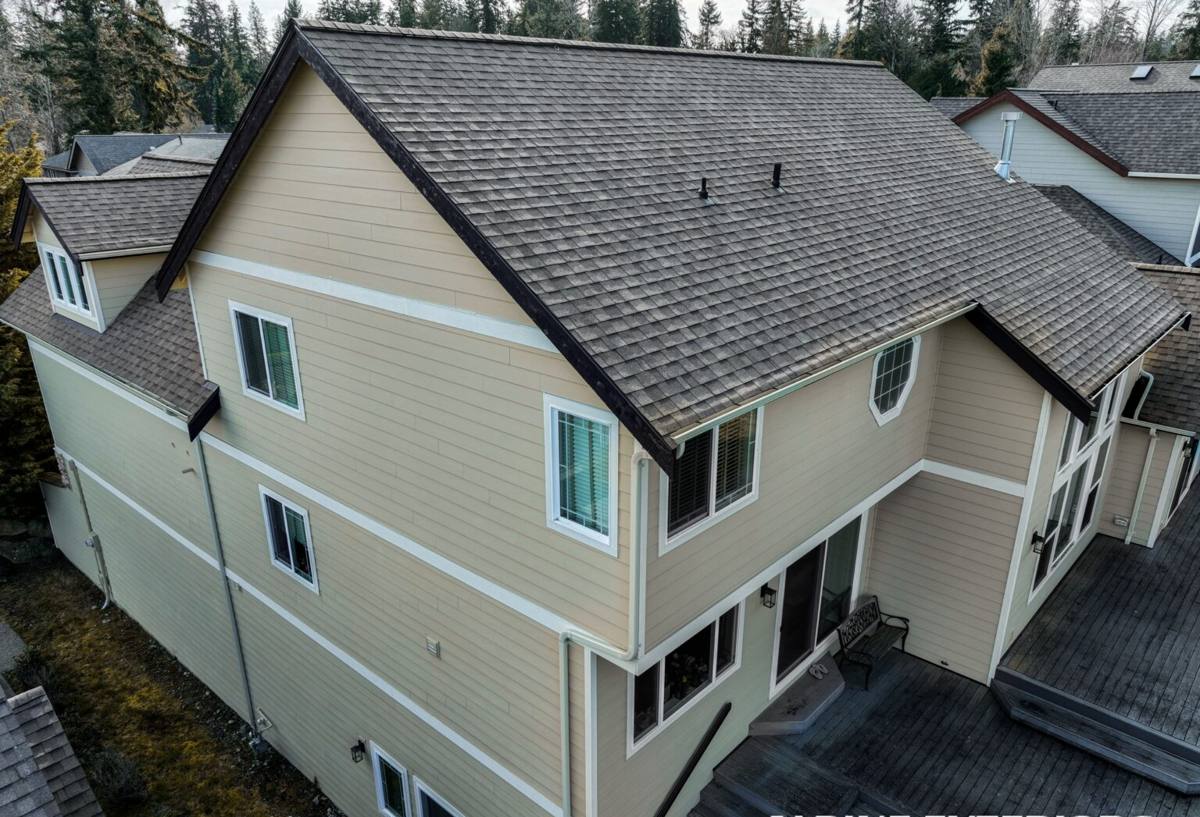
Signs Bow Homeowners Should Watch For
Because coastal moisture damage is gradual, a lot of homeowners live with failing windows for years before they connect the dots. Here's what we look for on evaluations in this area:
- Fogging or a visible haze between panes on double- or triple-glazed units — the seal has failed and the gas fill is gone
- Soft or discolored wood on the interior sill or exterior trim, especially on north- and west-facing walls that stay damp longer
- Moss or algae established in the frame corners or track, not just on the siding around the window
- Drafts you can feel with a hand near the frame on a windy day, even with the window latched shut
- Hardware — locks, cranks, hinges — that's stiff, corroded, or won't fully engage
- Visible daylight or gaps where the window frame meets the siding or trim
- Noticeably higher heating bills in winter with no other explanation
Any one of these is worth a look. Several at once usually means the window and its surrounding flashing are both due for replacement, not just the sash.
What a Correct Window Replacement Involves
It starts with what's behind the window, not the window itself
The window unit is only part of the job. The bigger factor in how long a replacement lasts in a place like Bow is what happens at the rough opening — the flashing, the sealant, and the water management behind the trim. A window installed with the wrong flashing sequence, or with caulk substituted for proper flashing tape, will leak eventually no matter how good the window itself is. We treat every opening as a chance to correct whatever the original installation got wrong.
Our approach on every install
- Remove the old window and inspect the rough opening for rot, soft framing, or prior water intrusion before anything new goes in
- Repair or replace any damaged framing — a new window over rotten sheathing just hides the problem for a few more years
- Install flashing in the correct shingle-lap sequence so water is directed out and down, never trapped behind the trim
- Set the window plumb, level, and square, then shim and fasten per manufacturer spec — a slightly out-of-square install stresses the frame and shortens the life of the seals
- Insulate the gap between the window and the framing with low-expansion foam or backer rod, not just caulk, to control both air leakage and condensation
- Seal and trim the exterior with materials rated for coastal exposure
- Clean up and haul away the old units and debris
Choosing the Right Window for a Bay-Adjacent Property
Not every window sold in the Pacific Northwest is a good fit for a property exposed to salt air and constant moisture. Frame material, hardware finish, and glazing all matter more here than they would on a dry side of the mountains.
| Frame Material | How It Holds Up Near the Bay | Maintenance |
|---|---|---|
| Vinyl | Good moisture resistance, won't rot or corrode; quality varies a lot by manufacturer | Low — occasional cleaning |
| Fiberglass | Very stable in temperature and moisture swings, strong resistance to salt-air degradation | Low |
| Aluminum | Prone to corrosion and pitting in salt air unless it's a marine-grade or well-clad product | Moderate to high |
| Wood (uncladded) | Best appearance option for some homes, but the most vulnerable to rot and moss in this climate without diligent upkeep | High |
| Wood-clad (vinyl or aluminum exterior) | Combines interior wood look with a weather-resistant exterior shell; a solid middle ground | Low to moderate |
We don't install bare wood exteriors or thin aluminum frames in this area as a matter of standard practice — not because those products are bad everywhere, but because the maintenance burden they carry near Samish Bay isn't something we want a homeowner to inherit a few years after the install. We'll walk through the honest trade-offs of each option for your specific house and budget.
What Drives the Cost of a Window Replacement Project
Every Bow property is different, so we don't quote sight unseen — but these are the factors that typically move the price up or down:
| Factor | Why It Matters |
|---|---|
| Number and size of windows | Larger openings and full-house replacements have better per-unit pricing than one-off jobs |
| Frame material | Vinyl is typically the most affordable; fiberglass and wood-clad cost more upfront but often less over the life of the window |
| Condition of the rough opening | Rot or water damage found during removal adds repair time before the new window can go in |
| Glazing package | Double-pane is standard; upgraded low-E coatings and gas fills add cost but improve comfort and efficiency |
| Access and site conditions | Second-story windows, tight setbacks, or landscaping obstacles can add labor time |
| New construction vs. retrofit | Retrofit (insert) replacement is generally faster and less expensive than a full-frame replacement, when the existing frame is sound |
Broadly, homeowners in this area should expect a wide range depending on these variables — a single-window retrofit is a very different project than a whole-house upgrade with full-frame replacement. We'll give you real numbers once we've looked at your windows in person.
Retrofit vs. Full-Frame: Which Does Your Home Need?
This is one of the most common questions we get on evaluations, and the honest answer depends on what we find at the opening.
Retrofit (insert) replacement
If the existing frame is square, dry, and structurally sound, we can often install a new window inside the old frame. It's faster, less invasive to your siding and trim, and typically more affordable. This works well for homes where the original construction and flashing were done correctly and age is really the only issue.
Full-frame replacement
If there's rot, prior water damage, or the opening is out of square, a full-frame replacement is the right call — pulling the old frame out entirely, repairing the framing, and re-flashing before the new window goes in. It costs more and takes longer, but it's the only way to actually fix a chronic leak instead of building a new window around an old problem. Given how much rain this area sees, we'd rather tell you this upfront than have you deal with a leak again in three years.
Why a Crew That Already Works Bow Makes a Difference
Bow doesn't have the volume of a bigger Skagit County town, and that means a lot of contractors treat it as an afterthought — a stop on the way to a bigger job elsewhere. We work this area regularly, which matters for a few practical reasons: we already understand how exposed a given property is based on its position relative to the water and tree cover, we're not guessing at what flashing and frame choices hold up here versus further inland, and we're not a stranger showing up once and disappearing if a callback is needed. Local, ongoing presence is part of doing this work responsibly, not just a talking point.
Maintaining New Windows in a Moss-Prone Climate
A correctly installed window with the right materials will need far less attention than an old one, but a little seasonal care goes a long way in this climate:
- Rinse frames and tracks periodically to clear salt residue and organic buildup before moss gets a foothold
- Keep weep holes (the small drainage openings in the bottom of the frame) clear of debris so water can drain out instead of pooling
- Trim back vegetation that keeps a window in constant shade and dampness
- Check exterior caulking annually and touch up before gaps open up
- Operate hardware a few times each season, even on windows you don't open often, to keep locks and cranks from seizing
Get a Straightforward Estimate
If your windows in Bow are drafty, fogged, sticking, or showing moss and moisture damage around the frame, it's worth having a local crew take a look before another wet Skagit County winter sets in. We'll give you a clear picture of what's actually going on at the opening, what your realistic material options are, and honest pricing — no pressure, no upsell. Reach out using the form below to schedule a free estimate.