 Skagit County
 Windows Built for How Clear Lake Actually Weathers
Clear Lake sits in that part of Skagit County where the weather never fully commits to one thing. You get long stretches of drizzle, sudden driving rain off passing fronts, humid mornings that don't burn off until noon, and a moss season that seems to start earlier every year and end later. None of that is dramatic on its own, but it's relentless, and windows are one of the first parts of a house to show the wear from it. Frames swell and stick. Seals give out quietly, years before anyone notices the fog between the panes. Sills collect the kind of standing moisture that rots wood from the inside before the surface ever looks bad.
Custom window work in Clear Lake isn't about picking a style out of a catalog. It's about choosing materials, flashing details, and installation practices that hold up to a specific kind of wet. We treat every window job here as a moisture-management project first and an appearance upgrade second — because if the moisture management is wrong, the appearance won't last either.
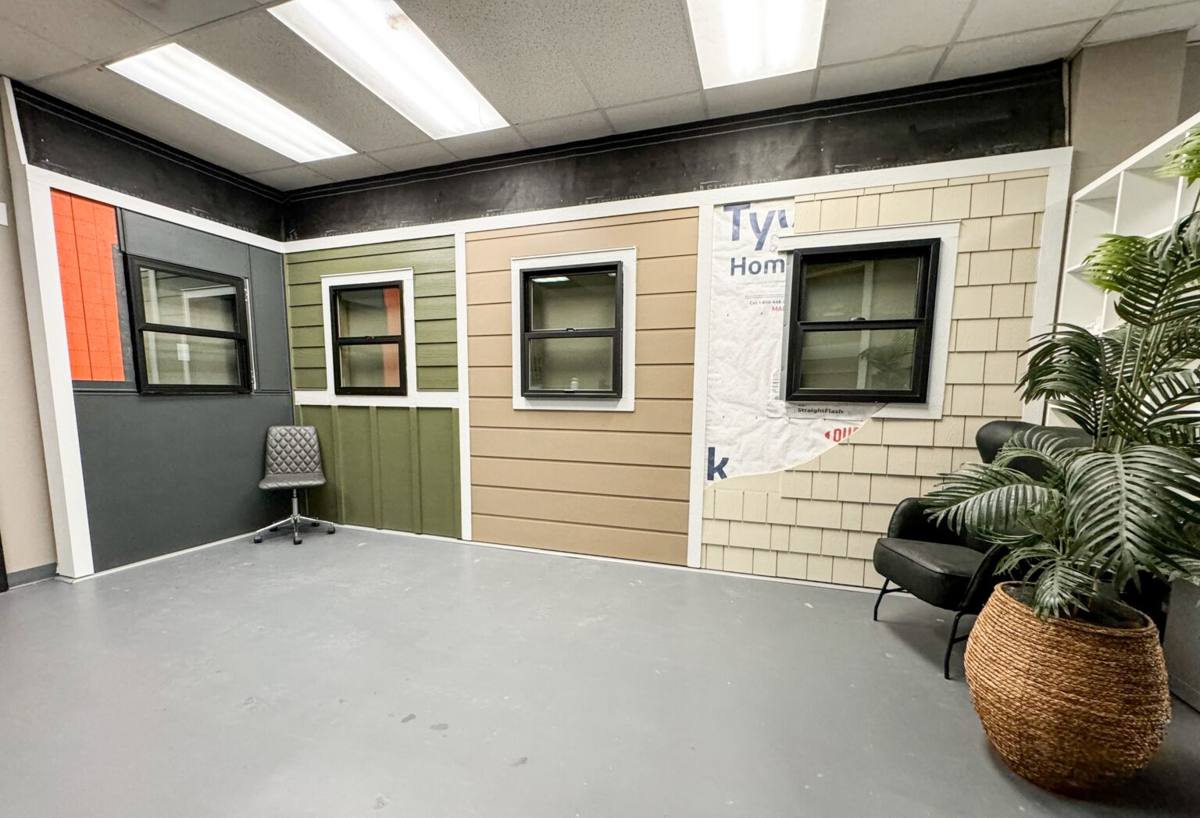
What This Climate Does to Ordinary Windows
Moisture-Laden Air and Condensation
The marine-influenced air that moves through this part of Skagit County carries more moisture than most homeowners realize, and older or poorly sealed windows show it first — condensation on interior glass, dampness at the sill, and eventually soft spots in the surrounding trim. Once moisture gets behind a window frame, it doesn't leave quickly. It sits there and works.
Driving Rain and Wind-Loaded Water
Rain in this area rarely falls straight down. Wind pushes it sideways into siding and window openings, which means flashing and sealant details matter more here than they do in drier climates. A window that would perform fine in a low-wind, low-rain region can fail within a few seasons if it's not flashed correctly for wind-driven water.
The Long Moss Season
Moss and algae don't just grow on roofs. Given enough shade and moisture, they colonize window sills, exterior trim, and the corners of frames where debris collects. Beyond looking bad, that growth holds moisture against the material constantly, which accelerates rot in wood components and can degrade lower-grade vinyl and sealants over time.
Salt-Influenced Air Across the Region
Skagit County's proximity to Puget Sound means many homes in the broader area deal with air that carries a mild salt content, which is harder on exposed metal hardware — hinges, cranks, locks, and cladding fasteners — than most people expect. It's one more reason we default to corrosion-resistant hardware on window installs in this region rather than whatever ships standard.
Signs Your Current Windows Are Losing the Fight
- Fogging or haze between panes of a double- or triple-pane window (a broken seal, not a cleaning problem)
- Soft, spongy, or discolored wood at the sill or lower frame corners
- Windows that stick, drag, or won't latch fully — often swelling from moisture, not just age
- Visible moss, algae, or black staining collecting on sills or in frame corners
- Drafts or cold spots near the window even when it's fully closed and locked
- Paint or finish peeling specifically around the window, rather than the wall generally
What a Correct Custom Window Job Actually Involves
"Custom" here doesn't mean expensive for its own sake — it means the window and the installation are matched to the specific opening, the specific wall assembly, and the specific exposure that section of the house gets. A stock-size replacement dropped into an out-of-square opening with generic sealant is where most premature window failures start.
Accurate Measurement and Opening Assessment
Older homes around Clear Lake often have openings that have shifted slightly over decades of settling. We measure each opening individually rather than assuming uniformity across a house, and we check the condition of the framing and sill before ordering anything.
Flashing and Water Management
This is the part that determines whether a window lasts ten years or thirty. Proper flashing directs water that gets past the exterior cladding back out, rather than letting it pool at the sill or migrate into wall framing. Given how much wind-driven rain this area sees, we don't treat this step as optional or generic.
Sealing and Insulation Detail
Foam backer rod and appropriate sealant at the rough opening, paired with correct interior air sealing, cuts down on both drafts and the condensation that forms when warm interior air meets a cold, poorly sealed frame.
Hardware and Frame Material Selection
Given the moisture and mild salt exposure typical in this part of Skagit County, we lean toward corrosion-resistant hardware and frame materials that don't depend on paint or finish to keep moisture out.
Frame Material Comparison for Clear Lake Conditions
| Material | Moisture Resistance | Maintenance | Typical Fit for This Area |
|---|---|---|---|
| Vinyl (quality-grade) | Strong — won't rot or corrode | Low — occasional cleaning | Good all-around choice for most homes |
| Fiberglass | Very strong — dimensionally stable in swings of moisture | Low | Excellent for high-exposure walls |
| Wood-clad | Good if cladding is intact; wood core vulnerable if breached | Higher — finish and seals need monitoring | Best where appearance priorities outweigh low-maintenance needs |
| Aluminum | Weak on thermal performance; can condensate heavily | Moderate | Generally not our first recommendation here |
We're honest about the trade-offs rather than pushing one material as a cure-all. A wood-clad window can look excellent, but it asks more of the homeowner in upkeep than a fiberglass or quality vinyl unit will, and in a climate like this, missed maintenance shows up faster than in a drier region.
Our Process for a Clear Lake Window Job
- On-site assessment of existing windows, openings, and any moisture or rot already present
- Honest conversation about material options and realistic cost ranges for your specific openings
- Precise measurement and ordering to the actual opening, not a generic stock size
- Removal of old units with an inspection of the framing and sill underneath
- Correct flashing and sealing installed before the new window ever goes in
- Final fit, operation check, and interior/exterior finish work
- Walkthrough so you know how to maintain the new windows through the wet season
Energy Efficiency and Condensation Control
Homeowners around Clear Lake usually come to us for two reasons at once: drafty, aging windows driving up heating costs, and condensation that's starting to damage sills and trim. Both problems often trace back to the same root cause — a failed seal or poor original installation, not just an old window style. A properly installed, appropriately rated window addresses both at the same time: better insulation lowers energy loss, and correct sealing keeps warm interior air from meeting cold glass in a way that produces heavy condensation.
We don't oversell efficiency ratings beyond what's realistic for this climate. A window that's a strong match for a colder, drier interior region isn't automatically the best choice here — what matters more is consistent performance against sustained damp and repeated wet-dry cycling.
Maintaining Custom Windows in a Wet Climate
- Clear moss, leaves, and debris from sills and tracks a few times a year, especially in fall and winter
- Check exterior caulking annually for cracking or gaps, particularly on sun- and wind-exposed walls
- Test operation of locks and cranks periodically — sticking is often the first sign of frame swelling or hardware corrosion
- Watch for any soft spots in wood trim or sills and address them before they spread
- Keep gutters and downspouts clear so roof runoff isn't dumping extra water near window openings
Why Hiring a Crew That Already Works Clear Lake Matters
A window installer who mostly works drier inland regions will size up a job differently than a crew that deals with Skagit County's wet season year after year. The flashing detail, the sealant choice, the hardware grade, even the timing of the install — all of it changes when you're planning for sustained moisture rather than the occasional storm. We work this area regularly, which means we're not guessing at how a given product or detail holds up here; we've seen it over multiple wet seasons on homes with the same exposure yours has.
That local familiarity also means fewer surprises during the estimate. We know what to look for in openings around Clear Lake specifically — the kind of rot patterns, framing quirks, and moisture entry points that show up again and again in this area — so the plan we give you is grounded in what actually happens to windows here, not a generic national playbook.
Get a Straight Answer About Your Windows
If your windows are fogging, sticking, drafting, or just showing their age faster than they should, it's worth having someone look at them before small problems turn into framing repairs. We offer free, no-pressure estimates for custom window work in Clear Lake — come take a look, ask questions, and get a straight assessment of what your home actually needs. Use the form below to get started.