 Skagit County
 Building Decks in Conway, Washington
Conway sits in the low-lying delta country where the Skagit River meets Puget Sound tidal influence, and that location shapes everything about how a deck should be built here. Homes in and around Conway deal with a longer wet season than much of the state, moist ground for a good part of the year, salt-tinged air moving in off the Sound, and driving rain that comes in sideways during winter storms. A deck built to a generic spec sheet, without accounting for those conditions, tends to show problems within a few years — soft spots, corroded hardware, slick moss buildup, and railings that loosen before their time. A deck built for Conway's actual climate holds up the way it should.
This page covers what we look at specifically for deck projects in Conway: material choices that make sense for this environment, how we handle footings and framing in ground that stays damp longer than drier parts of Skagit County, and what our build process looks like from first visit to final walkthrough.
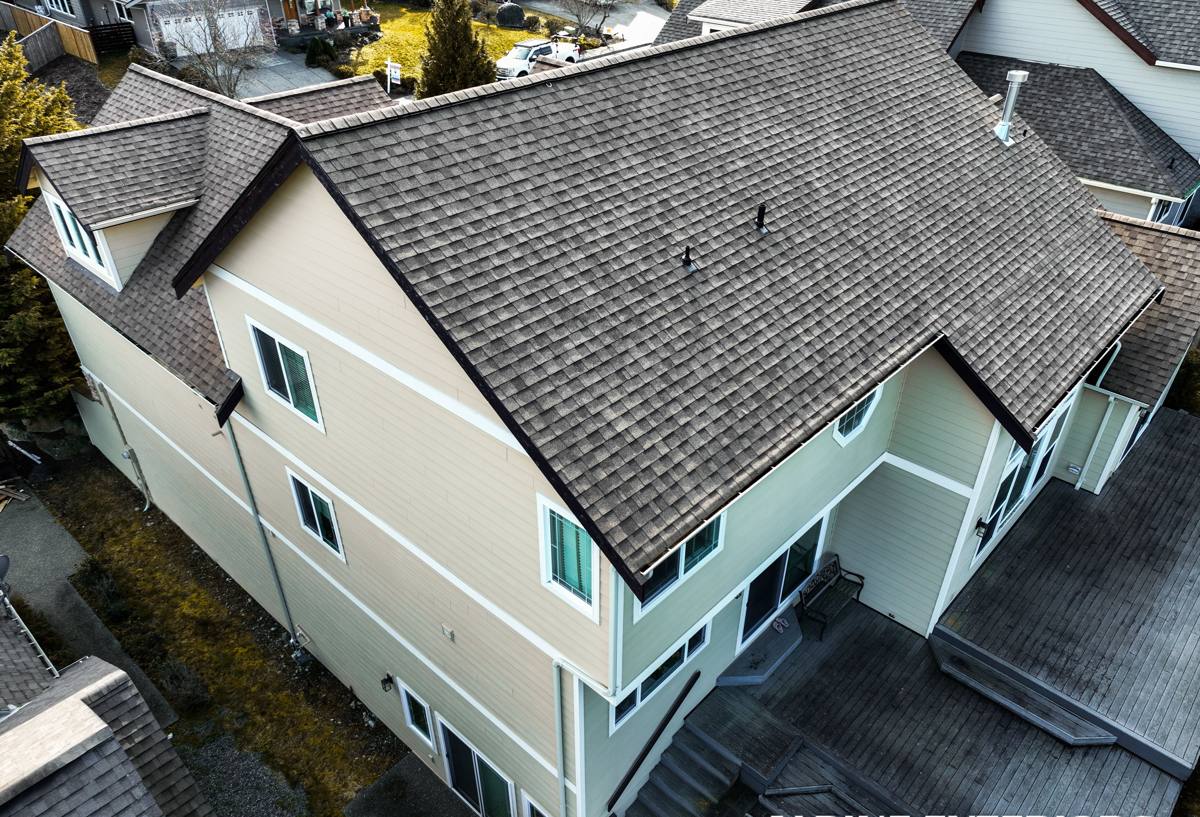
What Skagit County's Climate Does to a Deck
Three conditions drive most of our material and construction decisions on decks in this area:
Salt Air
Even set back from open water, homes near the Skagit delta get enough salt-laden air moving through on a regular basis to accelerate corrosion on unprotected metal. Standard zinc-coated deck screws and connectors that would hold up fine further inland can start rusting and staining the decking around them within a couple of seasons out here.
Driving Rain
Skagit County storms often bring rain at an angle, not straight down. That matters for how a deck meets the house — flashing and ledger board details that would be adequate in a drier, calmer climate aren't enough when wind-driven rain is pushing water sideways into every seam and fastener hole.
Moss and Algae Season
Long stretches of overcast, damp weather each year give moss and algae plenty of time to establish themselves on any decking surface that holds moisture. Some materials resist this better than others, and surface texture, gap spacing, and site shading all play a role in how fast a deck grows a green film.
Choosing the Right Decking Material for Conway
There's no single "best" decking material — every option is a set of trade-offs between upfront cost, maintenance, and how it behaves in a wet, salty climate. Here's how the common choices stack up for a Conway property:
| Material | Upfront Cost | Moisture & Salt Behavior | Maintenance |
|---|---|---|---|
| Pressure-treated pine | Lowest | Resists rot with proper treatment, but end cuts and fastener holes need re-sealing or they take on water | Annual cleaning and re-staining/sealing recommended |
| Cedar | Moderate | Naturally rot- and insect-resistant, ages to gray unless maintained, can develop moss in shaded damp areas | Periodic cleaning and oiling to preserve color and slow moss growth |
| Composite decking | Higher | Doesn't absorb water like wood, resists rot, but lower-quality composites can still grow surface algae in constant shade/damp | Occasional washing; no staining or sealing needed |
| PVC/capped polymer decking | Highest | Fully sealed surface, best resistance to moisture and staining, holds up well near salt air | Lowest — soap and water cleaning as needed |
We don't push one material on every job. A lot of it comes down to budget, how much shade and moisture the specific site gets, and how much upkeep the homeowner actually wants to do. What we won't do is install wood decking without proper end-cut sealing and fastener protection, because in this climate that shortcut shows up as rot within a few years — that's our standard regardless of which product a homeowner picks.
Getting the Structure Right
Footings in Damp Ground
Ground around Conway tends to stay wetter, longer, than higher and drier parts of Skagit County. Footings need to be set to proper frost and bearing depth, and we pay close attention to drainage around each footing so water doesn't pool against the concrete or the post base year-round. Post bases should sit above grade, not buried, so wood posts aren't sitting in standing moisture.
Ledger Board Attachment
The ledger board — where the deck framing attaches to the house — is the single most common failure point on older decks we get called out to inspect. Done right, it means proper flashing that sheds water away from the house sheathing, correct fastener spacing and type, and a gap or flashing detail that keeps wind-driven rain from tracking behind the board. Done wrong, water gets trapped between the ledger and the house and starts rotting the rim joist from the inside, often long before it's visible from outside.
Framing Hardware
For any deck within reach of salt air off the Sound, we treat fastener and connector selection as non-negotiable. That means stainless steel or heavy hot-dip-galvanized hardware rated for coastal exposure, not the standard-grade coated screws and joist hangers that are fine in a drier inland climate but corrode faster here.
Railings, Stairs, and Hardware
Railings take a lot of direct weather exposure and a lot of physical stress — leaning, gripping, kids climbing. In Conway's climate we watch three things closely on railing systems:
- Post-to-frame connections rated for the actual code-required lateral load, not just what looks sturdy
- Corrosion-resistant fasteners at every railing connection point, since these joints see repeated stress and moisture
- Baluster and cap material that won't cup or split as it cycles through wet and dry over the winter
- Stair stringers set on proper footings with drainage, not resting directly on soil
Permits and Site Considerations in Skagit County
Deck permitting in Skagit County depends on the deck's height, size, and attachment to the structure, and whether the property falls within a flood-prone or critical area designation — which is worth checking specifically for lower-lying parcels near Conway given the area's proximity to the river delta. We handle the permit application and inspection process as part of the job, and where a site sits in a flood-influenced area, that can affect footing depth, post height, and sometimes deck elevation relative to grade. We flag that during the site visit rather than after the framing is already up.
Our Process for a Conway Deck Project
- Site visit and assessment — we look at grade, drainage, existing structure condition, and how the deck ties into the house
- Material and design discussion — honest talk through the cost and maintenance trade-offs above, sized to your budget
- Permit handling — we prepare and submit what Skagit County requires for the project scope
- Footings and framing — built to proper depth and drainage for this ground, with coastal-rated hardware throughout
- Ledger and flashing — the detail we take the most care on, since it's where most deck failures start
- Decking, railing, and finish work — installed per the manufacturer's spec for whichever material you've chosen
- Final walkthrough — we go over the finished deck and basic care so you know what upkeep, if any, it needs
Living With a Deck in Skagit County's Climate
Whatever material you choose, a deck out here needs some seasonal attention. Clearing debris out of gaps between boards keeps moisture from sitting and encouraging moss. A yearly wash-down — more often in shaded or north-facing spots — keeps algae from getting a foothold. Wood decking needs its sealer or stain reapplied on a regular cycle to keep water out of the grain; composite and PVC decking need far less, but even those benefit from periodic cleaning where moss tends to collect. None of this is complicated, but skipping it in a climate this wet is how a deck ages twice as fast as it should.
Why Local Experience on Your Deck Matters
A crew that already works Conway and the rest of Skagit County isn't guessing at footing depth for this ground, isn't guessing at which fastener grade holds up near the Sound's salt air, and isn't learning the county's permit process on your job. That experience shows up in details a homeowner might never think to ask about — ledger flashing, post base drainage, hardware grade — but that determine whether a deck is still solid in fifteen years or starting to fail in five.
If you're planning a new deck or replacing an aging one in Conway, we're happy to come take a look and walk you through options at no cost and no pressure. A short site visit is usually enough to give you a clear, honest picture of what your project involves.