 Skagit County
 Deck Building in Lyman: Built for the Conditions You Actually Have
Lyman sits along the Skagit River in a part of Skagit County that stays green for a reason — it's wet, most of the year. A deck here isn't just an outdoor living space; it's a structure that has to shed water, resist moss and mildew, and stand up to the marine-influenced weather that moves through this whole county, salt air off Puget Sound and all, even for river towns further inland. A deck built to a generic spec, without that climate in mind, will show problems within a few seasons: soft spots, black streaking, loose fasteners, and a surface that gets dangerously slick every fall and winter.
We build decks in Lyman the way this climate requires — correct drainage, correct fastener selection, correct spacing for airflow underneath, and materials chosen for how they'll actually perform here, not just how they look in a showroom.
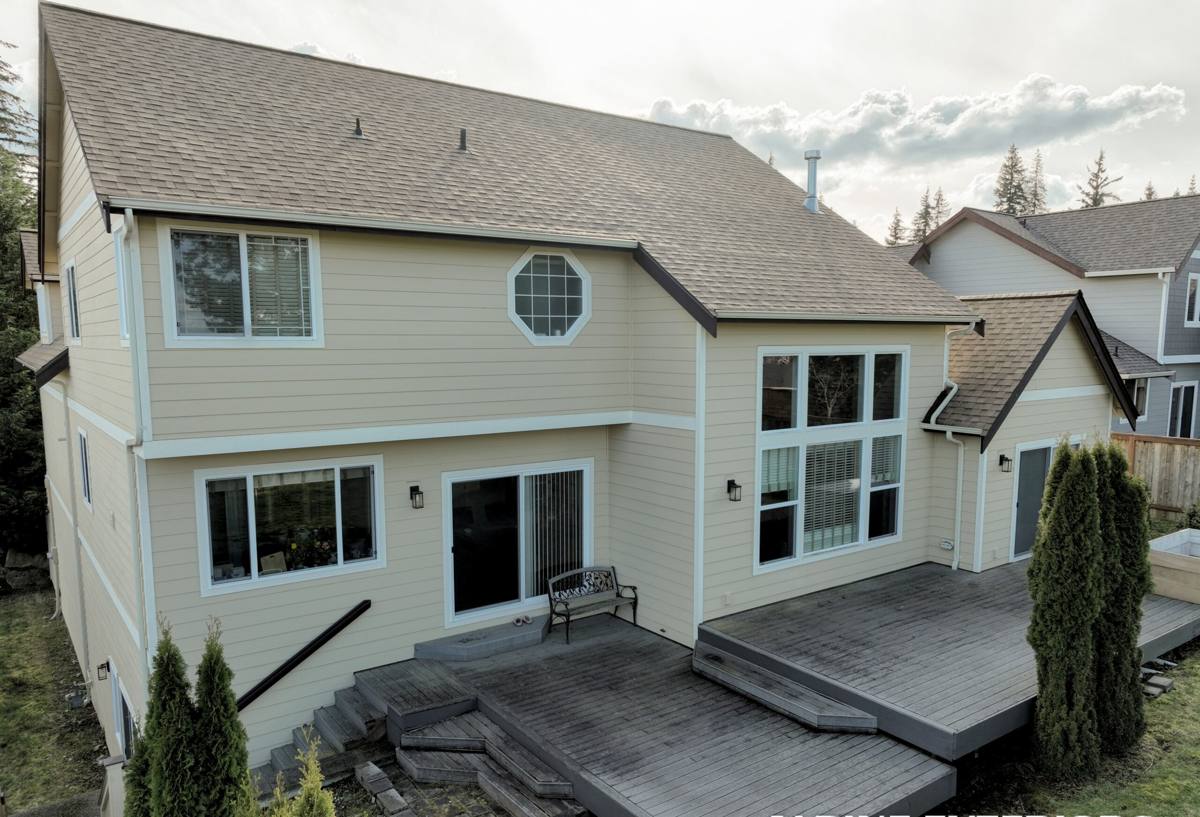
What Skagit County's Climate Does to a Deck
A few things define deck performance in this part of the county:
- Driving rain: Storms coming off the Sound don't fall straight down — wind-driven rain gets under railings, into end grain, and behind ledger boards if flashing isn't done right.
- Long moss season: Shade, moisture, and mild temperatures mean moss and algae can establish on deck boards for most of the year, not just a few winter months. Untreated or poorly ventilated decking stays damp and grows a green film that's both a maintenance headache and a slip hazard.
- Humidity and slow drying: Even after rain stops, wood and composite surfaces here take longer to dry out than they would in a drier climate. Any design that traps moisture — tight board spacing, poor under-deck airflow, boards laid directly on joists without a gap — accelerates rot and mildew growth.
- Fastener corrosion: Salt-laden marine air combined with near-constant moisture is hard on standard hardware. Fasteners and connectors that aren't rated for this environment corrode faster than homeowners expect, which weakens the structure long before the decking itself wears out.
None of this makes deck building in Lyman harder in a mysterious way — it just means the details that get skipped on a rushed job are exactly the details that matter most here.
Choosing the Right Decking Material
There's no single "best" decking material — there's a best material for your budget, your maintenance appetite, and how much sun or shade your deck actually gets. Here's how the common options compare for a Lyman property:
| Material | Upfront Cost | Maintenance | How It Handles Our Climate |
|---|---|---|---|
| Pressure-treated wood | Lowest | Annual cleaning, periodic sealing | Affordable and repairable, but needs consistent upkeep or moss and graying set in fast |
| Cedar | Mid | Regular sealing to hold color and resist decay | Naturally decay-resistant and handles moisture well, but still needs maintenance in a wet climate |
| Composite | Higher | Low — occasional washing | Resists rot and won't splinter; still needs airflow underneath to avoid mildew on the surface |
| PVC / capped polymer | Highest | Lowest | Best moisture resistance of the group; premium cost reflects that performance |
Whatever material you choose, we walk you through the honest trade-offs rather than pushing whatever's easiest for us to install. If you want low maintenance and have the budget for it, composite or capped polymer earns its cost here. If you're comfortable with a yearly cleaning and reseal, wood remains a solid, cost-effective choice.
A Note on "Maintenance-Free" Claims
No decking material in this climate is truly maintenance-free. Even the best composite boards need periodic washing to keep mildew and pollen film from building up in shaded, damp spots. We'd rather set that expectation up front than have you surprised by it in year two.
What a Correctly Built Deck Actually Involves
A deck that lasts in Skagit County comes down to what's underneath and behind the visible surface:
Footings and Framing
Footings need to be sized and set to local frost depth and soil conditions, not guessed at. Framing lumber should be rated for ground contact or outdoor exposure where it's close to grade, with joist spacing tight enough to support your chosen decking without excess flex.
Ledger Attachment and Flashing
Where a deck attaches to the house, the ledger board and flashing are the single most common point of failure we see on older or poorly built decks. Water that gets behind an improperly flashed ledger doesn't just rot the deck — it can work its way into the house's rim joist and siding. Correct flashing, proper fasteners, and a small gap between the ledger and siding to let water drain are non-negotiable in this climate.
Fasteners and Hardware
We use fasteners and structural connectors rated for exterior, corrosive-prone environments — not standard interior-grade hardware. This matters more here than in a dry inland climate, where cheaper hardware might get away with underperforming for longer.
Airflow and Drainage
Proper board spacing and clearance between the decking and the ground let air move underneath, which is what actually keeps moss and mildew from taking hold on the underside and edges of boards — not just the top surface people see.
Guardrails and Stairs
Decks raised above a certain height need code-compliant guardrails and stair construction. We build to the applicable building code for your specific deck height and layout, and we handle permitting where it's required rather than leaving that on you.
Our Process, Start to Finish
- On-site visit: We look at your property's grade, drainage, sun/shade exposure, and how the deck will tie into the house before recommending a design or material.
- Honest estimate: You get a clear scope and price range with material options explained — no pressure toward the most expensive choice.
- Permitting: If your deck size or height requires a permit, we handle that process with the local jurisdiction.
- Build: Footings, framing, ledger and flashing work, decking, and railings — built in that order, with each stage inspected before moving to the next.
- Walkthrough: We review the finished deck with you, including basic care guidance specific to the material you chose.
Moss, Mildew, and Keeping a Deck Looking Good Long-Term
Even a well-built deck needs some seasonal attention in this climate. A few habits go a long way:
- Sweep off fallen leaves and debris regularly — trapped organic matter holds moisture and feeds moss growth.
- Rinse or gently wash the deck surface a few times a year, more often in heavily shaded areas.
- Check that gaps between boards stay clear of debris so water and air can keep moving.
- Reseal wood decking on the manufacturer's recommended schedule — skipping a year in this climate shows up fast.
- Trim back overhanging branches and vegetation that keep sections of the deck shaded and damp longer than necessary.
Permits and Building Code Basics
Most jurisdictions in Skagit County require a permit for decks above a certain size or height, and require guardrails once a deck's walking surface is roughly 30 inches or more above grade. Requirements vary by exact location and property, so we confirm what applies to your specific project rather than assuming. Skipping required permitting on a deck can create problems later — at resale, at insurance claim time, or if the structure is ever inspected.
Why Hire a Crew That Already Works in Lyman
A contractor who works this part of Skagit County regularly already knows how local soil, grade, and moisture patterns behave, and doesn't need to relearn those lessons on your project. That familiarity shows up in smaller ways too — knowing which material choices hold up on shaded, tree-covered lots versus more open ones, and building in the drainage and airflow details that a one-off, out-of-town crew might not prioritize. It also means someone is reasonably close by if you have a question or a warranty concern after the build is done, rather than a company that did one job in the area and moved on.
Signs an Existing Deck Needs Attention
If you already have a deck in Lyman, a few warning signs are worth acting on before they become bigger problems:
- Soft or spongy spots underfoot, especially near the ledger board or stairs
- Persistent green or black staining that returns quickly after cleaning
- Rust streaking around fasteners or visible corrosion on hardware
- Gaps opening up between the ledger board and the house siding
- Railings or stair stringers that feel loose or move under normal use
Any of these are worth a professional look rather than waiting — moisture-related deck damage tends to spread underneath the surface faster than it shows up on top.
If you're planning a new deck or need an honest assessment of one you already have, we're happy to walk your Lyman property and give you a straightforward, no-pressure estimate — just fill out the form below.