 Skagit County
 Why La Conner Decks Wear Differently Than Decks Inland
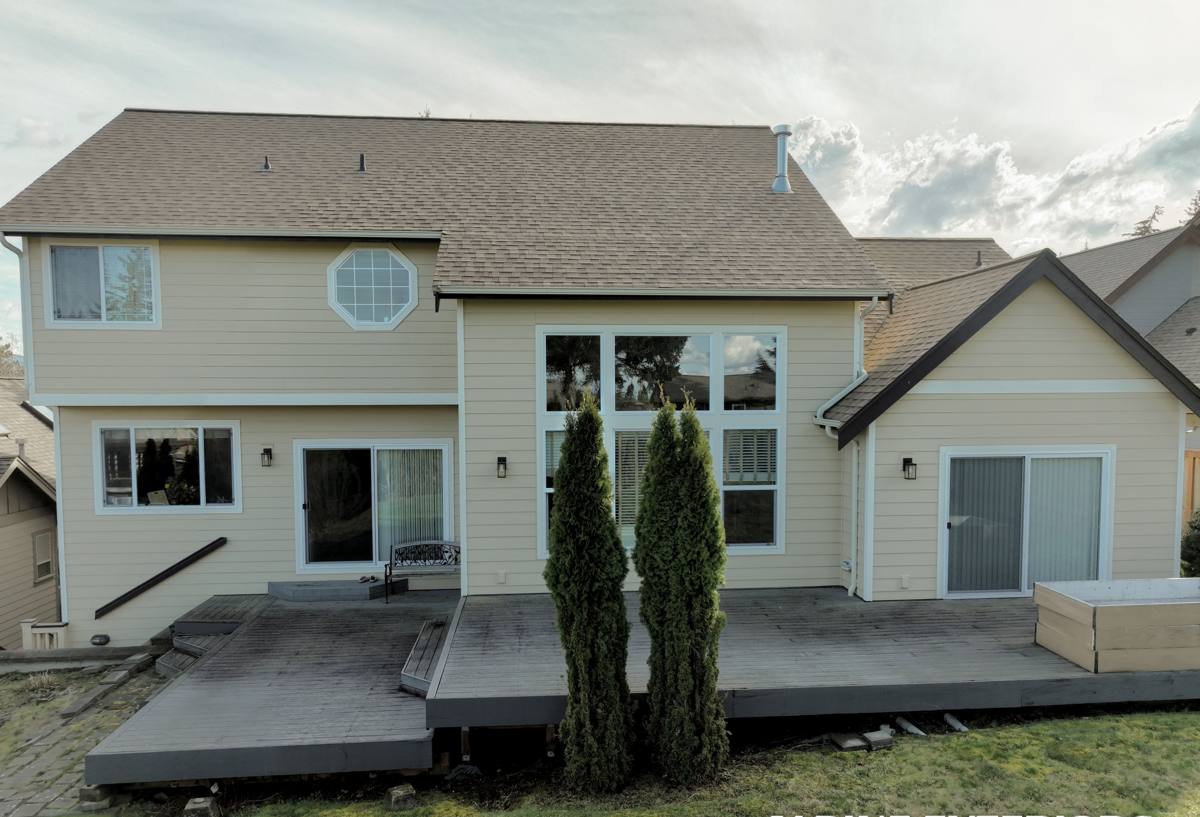
A deck built ten miles inland and a deck built near the Swinomish Channel are not aging the same way, even if they were built on the same day with the same lumber. La Conner sits right up against tidal water, which means homes here deal with a steady dose of salt-laden air on top of everything else Skagit County's wet season throws at a deck. Salt air speeds up corrosion on anything metal, driving rain gets pushed sideways into gaps that would stay dry elsewhere, and the long stretch of overcast, damp months gives moss and algae months to work into the wood before a good drying day ever shows up.
None of that means a deck in La Conner is doomed. It means the repair has to account for what's actually attacking it, not just patch the symptom. We've worked on enough decks in this area to know the difference between a board that looks bad but is structurally fine, and a board that looks fine but is hiding a real problem underneath.
What Salt Air and Moisture Actually Do to a Deck
It helps to understand the mechanics of the damage before deciding what kind of repair a deck actually needs.
Fasteners and Hardware
Nails, screws, joist hangers, and post bases are usually the first casualties. Salt air accelerates oxidation, and once a fastener starts rusting, it loses grip strength long before it looks broken from the top. A deck that feels slightly "bouncy" or has boards that have started to lift at the edges often has more to do with failing fasteners underneath than with the visible decking itself.
Ledger Board and Framing
The ledger board — the piece that attaches the deck to the house — is one of the most important structural pieces on the entire deck, and it's also one of the hardest to inspect without pulling back flashing or decking. Driving rain that gets pushed against the house by wind off the water tends to find its way behind poorly flashed ledger boards, leading to slow, hidden rot that isn't obvious until a board gives way underfoot.
Decking Surface and Moss
Moss and algae don't just make a deck slippery. They hold moisture against the wood surface for weeks at a time during Skagit County's long gray stretches, which softens fibers, breaks down finishes, and creates the ideal conditions for rot to set in around fasteners and board edges. A deck that gets scrubbed once a year but never properly sealed will keep losing ground to moss no matter how often it's cleaned.
Signs a La Conner Deck Needs Repair, Not Just a Cleaning
Homeowners often reach for a pressure washer when what the deck actually needs is a structural look. Here's what should prompt an actual inspection rather than a weekend cleaning project:
- Boards that flex, bounce, or feel soft when you walk across them
- Rust streaks running down from screws, nails, or metal connectors
- Gaps or separation where the deck meets the house siding or ledger board
- Persistent moss or dark staining that comes back within weeks of cleaning
- Railings or posts that wiggle more than they used to
- Any spot where a screwdriver or awl sinks easily into the wood
- Discoloration or swelling around joist hangers or post bases
Any one of these on its own might be minor. A few of them together usually means the deck has moisture getting into places it shouldn't, and that's worth an honest look before it turns into a bigger project.
What a Correct Deck Repair Actually Involves
A proper repair starts underneath, not on the surface. That means checking framing, hardware, and flashing before touching the decking boards themselves — because replacing boards on top of rusted hangers or a soft ledger board just buys a little time before the same problem resurfaces.
| Repair Step | What We Check | Why It Matters Here |
|---|---|---|
| Ledger board & flashing | Rot, gaps, water intrusion behind flashing | Primary path for wind-driven rain to enter framing |
| Fasteners & hardware | Rust, loose connections, corroded hangers | Salt air corrodes metal faster than in inland areas |
| Joists & framing | Soft spots, cracking, undersized support | Hidden rot often starts here before it reaches the surface |
| Decking boards | Cupping, splitting, moss buildup, fastener pull-through | Long moss season keeps surfaces damp for extended periods |
| Railings & posts | Movement, base rot, connection strength | Safety item — needs to hold up under real load |
Skipping straight to new boards without checking the layers underneath is one of the most common shortcuts in deck repair, and it's usually why a "repaired" deck starts failing again within a couple of seasons.
How We Approach a Deck Repair Job
Our process is straightforward, and it's built around not guessing:
- On-site inspection. We walk the deck, check for soft spots, inspect visible hardware, and look at the ledger connection where possible.
- Identify the actual cause. Surface damage, hidden rot, and fastener failure each call for a different fix — we figure out which one we're dealing with before quoting anything.
- Honest scope. We tell you what genuinely needs repair, what can wait, and what's structural versus cosmetic. We're not going to sell you a full rebuild if a targeted repair will hold up.
- Repair with materials suited to this climate. That includes corrosion-resistant fasteners and hardware rated for coastal exposure, not standard-grade hardware that will rust out again in a few years.
- Reseal or refinish exposed wood. A repair without proper sealing just starts the moisture clock over again.
Fastener and Hardware Standards
Given the salt air near the channel, we default to stainless steel or heavily coated, corrosion-resistant fasteners and connectors on repair work in this area rather than standard galvanized hardware. It costs a little more up front, but replacing rusted screws and hangers again in three or four years costs a lot more than that difference.
Repair vs. Rebuild: How We Help You Decide
Not every deck problem calls for tearing the whole thing out. But sometimes a repair is just delaying an inevitable rebuild, and it's better to know that up front than to spend money twice.
| Factor | Leans Toward Repair | Leans Toward Rebuild |
|---|---|---|
| Framing condition | Solid, isolated soft spots | Widespread rot in joists or beams |
| Ledger board | Intact, properly flashed | Rotted or improperly flashed originally |
| Age of structure | Under 12–15 years, well maintained | Original construction is much older or never sealed |
| Extent of damage | Limited to a few boards or connections | Damage found in multiple structural areas |
| Code & safety | Meets current railing/attachment standards | Outdated construction that wouldn't pass today's requirements |
We'll walk you through where your deck falls on that list rather than defaulting to whichever option is more profitable for us. Plenty of decks in La Conner just need targeted framing and fastener work, not a full teardown.
Why It Matters to Hire a Crew That Already Works in La Conner
Deck repair near tidal water isn't the same job as deck repair fifteen miles inland, and a crew that hasn't worked in this specific environment can miss things that matter. Knowing to spec corrosion-resistant hardware by default, knowing which flashing details actually hold up against wind-driven rain off the water, and knowing how aggressively moss takes hold during Skagit County's wet months all come from having done this work in this area before, not from a general deck repair checklist. It also means we're not learning on your project — we already know what tends to fail first on a La Conner deck and check those spots first.
Keeping the Repair Solid After We Leave
A good repair can still lose ground fast if moss and moisture are left unmanaged afterward. A few habits go a long way:
- Clean moss and debris off the deck surface at the start and end of the wet season
- Keep gutters and downspouts clear so runoff isn't draining directly onto the deck
- Reseal or refinish exposed wood on the schedule recommended for the product used
- Check railings and stair connections for movement once or twice a year
- Address small issues — a loose board, a rust spot — before the next wet season sets in
None of this requires a lot of time, but skipping it is how a solid repair turns into a repeat repair a few years later.
If your deck has soft spots, rust stains, moss that keeps coming back, or you're just not sure whether it needs a repair or a rebuild, we're happy to take a look. Fill out the form below for a free, no-pressure estimate — we'll give you a straight answer about what your deck actually needs.